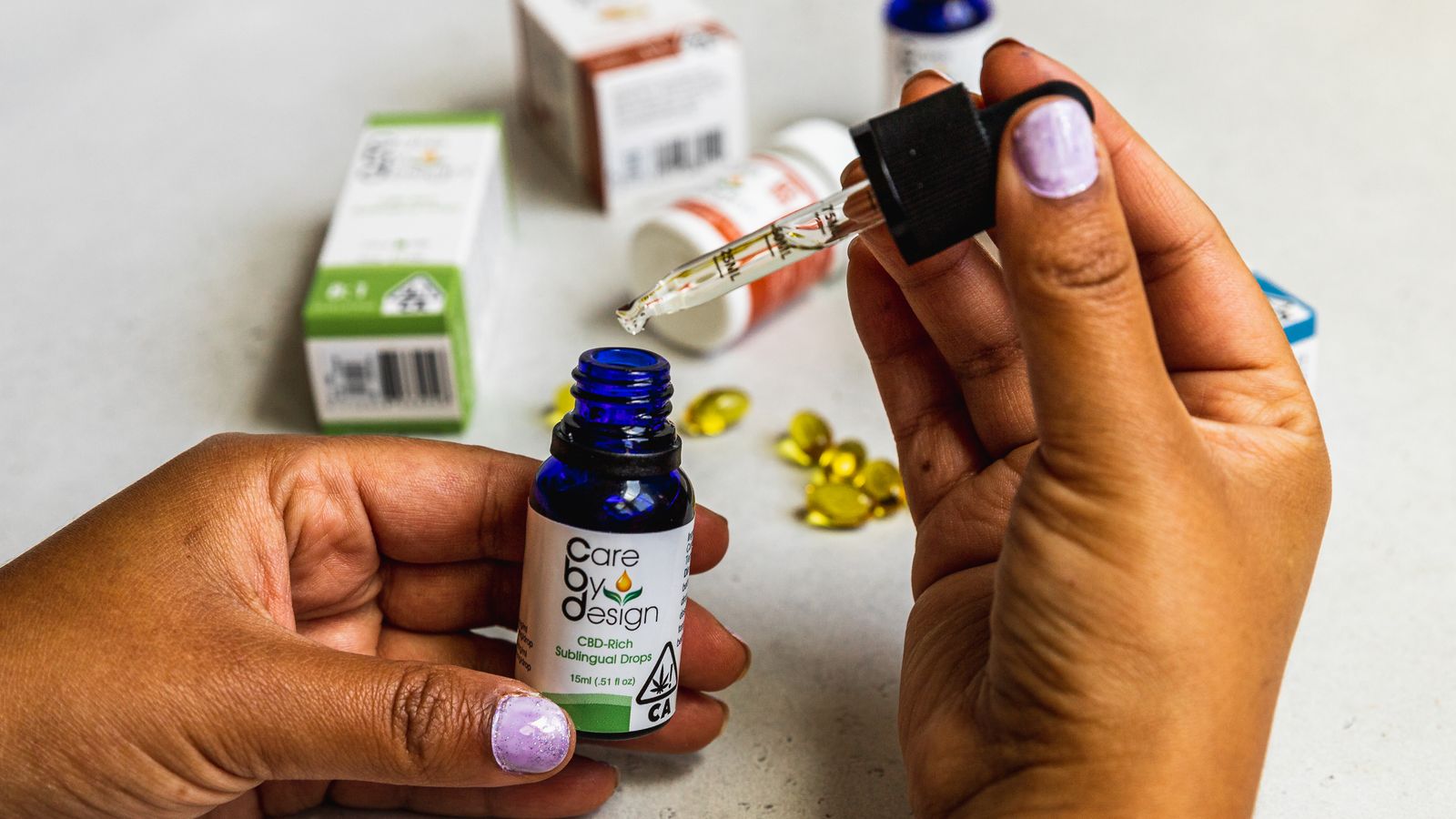
Here is a chemistry fact that sounds made up: CBD and THC are built from exactly the same atoms. Both have the formula C21H30O2, twenty-one carbons, thirty hydrogens, two oxygens. The only difference is how those atoms are arranged. One arrangement gets you high. The other does not. That tiny structural shuffle is the whole story, and everything else about these two molecules flows from it.
Why one is intoxicating and one is not
Your body runs a signaling network called the endocannabinoid system, with receptors scattered through the brain, immune system, gut, and skin. The receptor that matters most here is CB1, which is dense in the brain.
THC’s shape lets it lock into CB1 directly and activate it. That activation is the high: the euphoria, the altered time sense, the sudden importance of snacks. CBD’s shape does not fit CB1 the same way. Instead of activating the receptor, it works around the edges, influencing how other compounds bind and interacting with entirely different targets like serotonin receptors. Same atoms, different key, different doors.
CBD can even blunt some of THC’s effects. Research on this is mixed, with some studies finding CBD softens THC-induced anxiety and others finding little effect, but the two clearly do not simply stack on top of each other.
How the effects compare
THC produces intoxication, and along with it the well-known side effects: red eyes, dry mouth, short-term memory hiccups, elevated heart rate, and in some people at higher doses, anxiety or paranoia. It is also the compound behind most of cannabis’s appetite effects.
CBD at typical doses produces no high. Common side effects, when they show up at all, run to drowsiness, digestive upset, and appetite changes. The World Health Organization reviewed CBD in 2018 and found a generally good safety profile with no evidence of abuse potential. That does not make it harmless. CBD interferes with the liver enzymes that process many prescription drugs, roughly the same way grapefruit does, so anyone on medication should clear it with a doctor or pharmacist first.
One more practical difference: drug tests. Standard tests screen for THC metabolites, not CBD. Pure CBD will not fail you, but full-spectrum CBD products legally contain up to 0.3 percent THC, and with regular use that trace can accumulate enough to trigger a positive. If your job tests, this deserves more caution than most labels suggest.
The legal split
Law draws the line by plant and percentage, not by molecule. The 2018 Farm Bill defined hemp as cannabis with no more than 0.3 percent THC by dry weight, making hemp-derived CBD federally legal, while cannabis over that threshold remains federally illegal and regulated state by state.
States then layer their own rules on top, and they change often. Here in Alabama, a 2025 law known as HB445 tightened things considerably, including a ban on smokable hemp flower products and new rules for consumable hemp goods. Wherever you live, check current local law before buying anything, because a product that is fine in one state can be a problem one state line later.
They work better as a team than a rivalry
The versus framing is a little misleading, because the most studied cannabis medicine in the world, a pharmaceutical called Sativex used in over 25 countries for MS-related spasticity, contains both compounds in a deliberate 1 to 1 ratio. Researchers who study the entourage effect argue cannabinoids and terpenes together do things neither manages alone. The evidence there is still developing, but “which one is better” was probably never the right question. “Which one fits my situation, my tolerance, my local laws, and my drug testing reality” is the useful version.
Start low with either one, go slow, keep anything infused away from kids and pets, and never drive under the influence of THC. Two molecules, one atomic recipe, very different evenings.