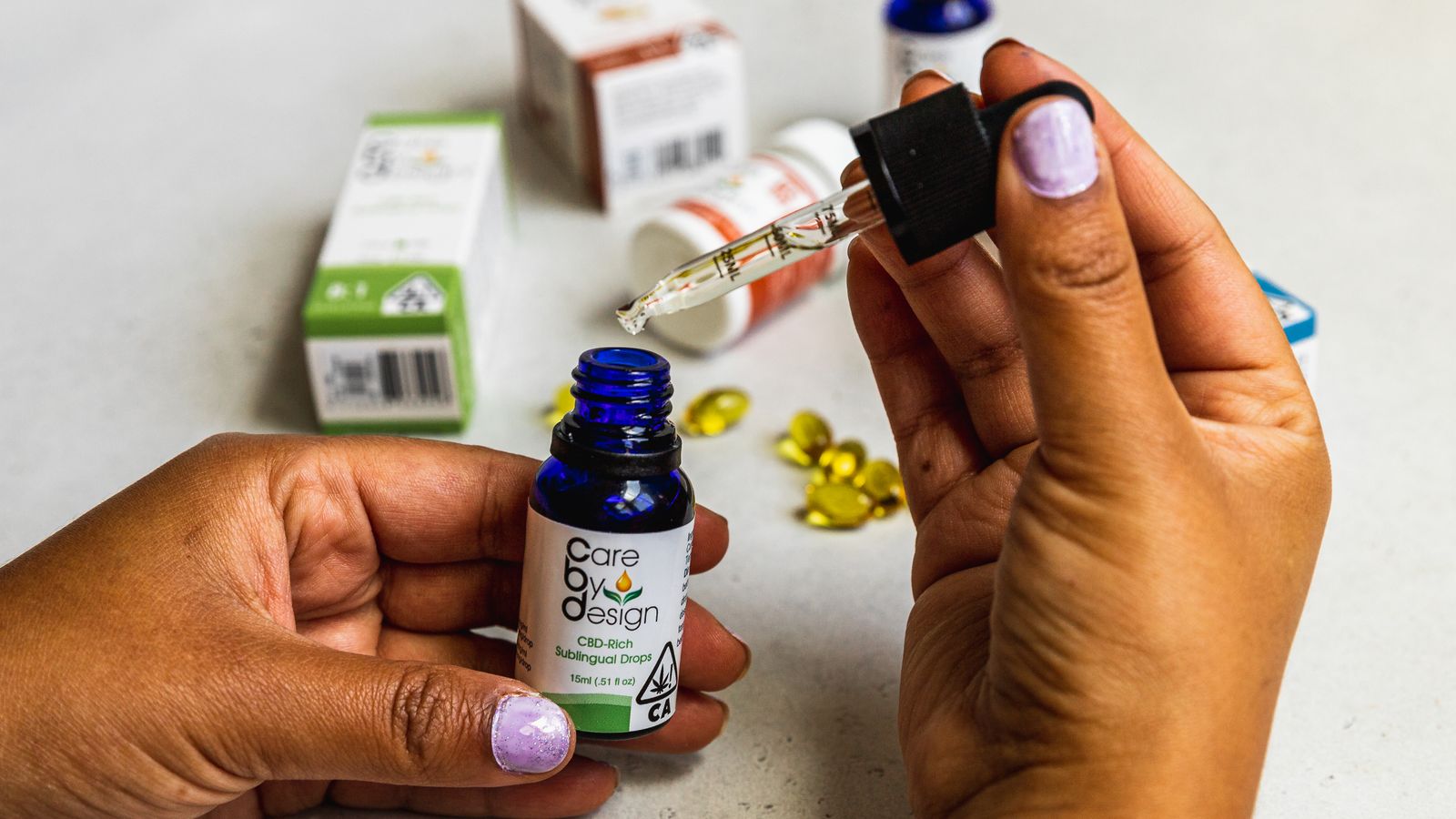
The CBD market is not well policed. The FDA has sent warning letters for years to companies selling products with less CBD than the label claims, or none at all, and independent testing keeps finding the same thing. A 2017 study in JAMA tested 84 CBD products bought online and found only 31 percent were accurately labeled. That was a while ago, and the market has improved some, but the lesson holds: the label is a claim, not a fact.
The good news is that a handful of questions separates trustworthy products from the junk. Ask these before your money leaves your pocket, whether you’re in our shop or anyone else’s.
Can I see the lab report?
This is the question that matters most. Every legitimate CBD product has a certificate of analysis (COA) from a third-party lab, usually reachable by a QR code on the package. It should show the actual cannabinoid content, and the batch number on the report should match the batch on your bottle.
If a seller can’t produce a COA, walk away. If the COA is two years old, or tests a different batch, or comes from the company’s own in-house lab, treat it as half an answer. And read it for more than the CBD number: a full panel screens for pesticides, heavy metals, and residual solvents. Hemp is very good at pulling metals out of soil, which is great for cleaning up farmland and bad for an extract made from careless crops.
How many milligrams, and per what?
A bottle that shouts 500 mg on the front might mean 500 mg in the whole bottle, which works out to about 17 mg per dropper. That’s a reasonable dose for some people and a shrug for others. Do the math per serving, then do the math per milligram: divide the price by the total mg to compare products honestly. A $30 bottle with 250 mg costs twice as much per milligram as a $60 bottle with 1000 mg.
Full spectrum, broad spectrum, or isolate?
Full spectrum keeps everything the plant made, including terpenes and up to 0.3 percent THC. Broad spectrum strips the THC but keeps the rest. Isolate is pure CBD alone. There’s decent reasoning behind starting with full spectrum, since the minor compounds seem to contribute, but if you’re drug tested at work or want zero THC for any reason, broad spectrum or isolate is the right call. A seller should be able to explain the difference without a sales pitch attached.
Where was the hemp grown, and how was it extracted?
You want hemp grown in the United States under a state agriculture program, where testing rules apply. On extraction, CO2 and ethanol are both fine methods; what matters is that the finished product tested clean. A seller who knows the answer to this question is a seller who knows their supplier, and that alone tells you something.
What is this product actually for?
An honest answer sounds like: a lot of our customers use this for winding down at night, results vary, start with half a dropper. A dishonest answer sounds like a cure. The FDA does not permit CBD sellers to claim it treats diseases, and the research so far supports modest, specific uses rather than miracles. Anyone promising to fix your arthritis, anxiety, and marriage in one bottle has told you everything you need to know about them.
One last question to ask yourself rather than the seller: am I taking prescription medication? CBD interacts with several common drugs, including blood thinners, so talk with your doctor before starting. Then buy from someone who answered the other questions without flinching.