Short answer: yes, you can fly with CBD inside the United States, as long as it’s hemp-derived with no more than 0.3 percent delta-9 THC. The TSA updated its policy in 2019 to say exactly that. But the short answer skips some details that matter, and a few of them can turn a smooth trip into a long conversation at a security checkpoint.
What the TSA actually says
TSA’s official line is that products containing hemp-derived CBD are allowed in both carry-on and checked bags, provided they comply with the 2018 Farm Bill‘s 0.3 percent THC limit. FDA-approved medications like Epidiolex are explicitly fine too.
Here’s the useful context: TSA officers are not searching for drugs. Their job is security threats, and they say so plainly. But if they happen to find something that looks illegal during screening, they’re required to refer it to local law enforcement. That’s where the details start to matter, because “looks legal” and “is legal” get sorted out by whatever officer shows up, under whatever state law applies at that airport.
Practical rules for a smooth trip
A few habits take most of the risk out of it:
- Follow the liquid rules. A tincture in your carry-on has to be 3.4 ounces or less, in your quart bag, same as shampoo. Most CBD bottles are 1 ounce, so this rarely bites, but a big pump bottle of topical belongs in checked luggage.
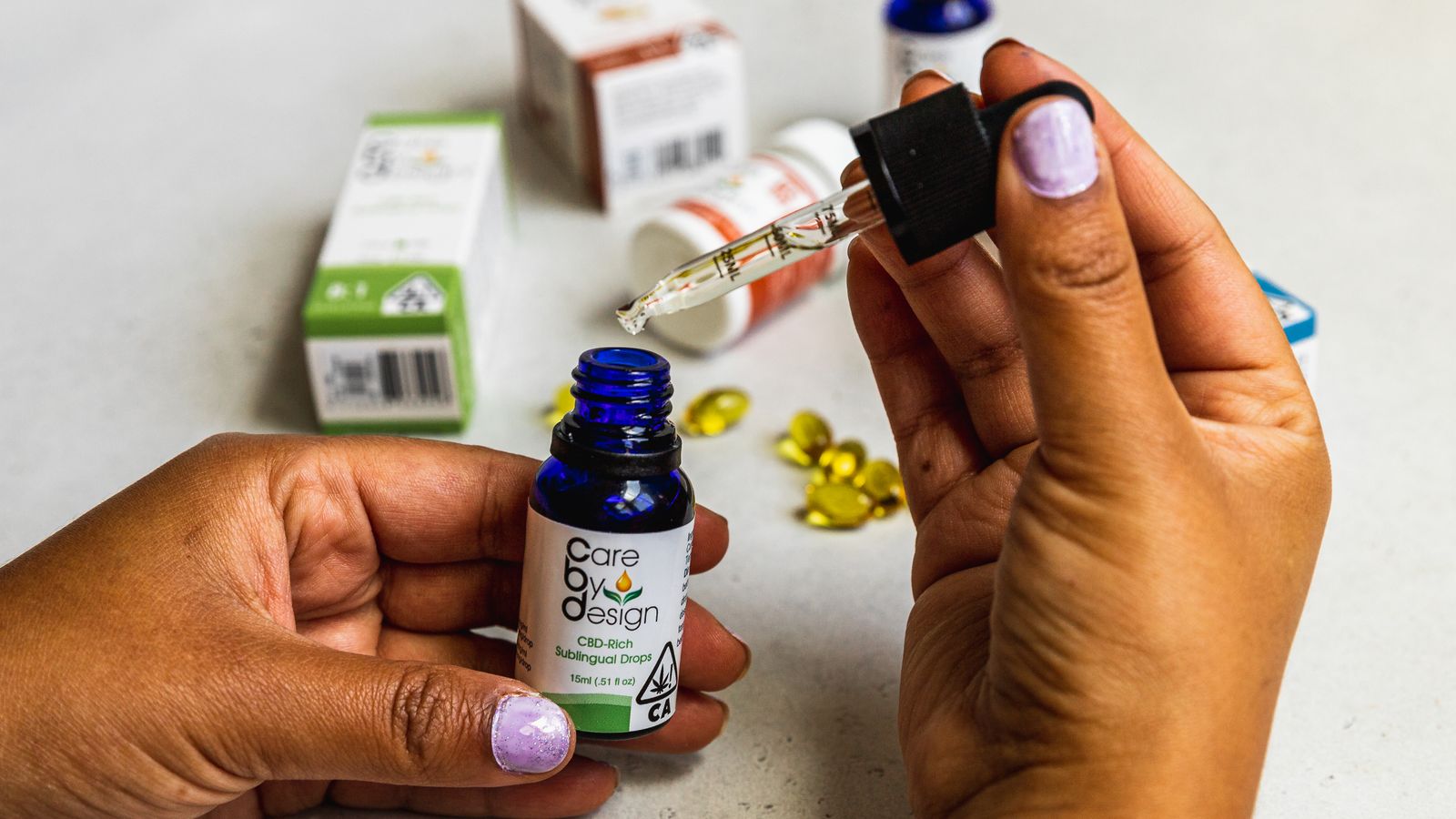
- Keep it in original packaging. A labeled bottle that says hemp-derived CBD with a THC percentage reads very differently than mystery oil in an unmarked dropper.
- Carry the certificate of analysis. Reputable brands publish lab results with a batch number, usually behind a QR code on the box. Screenshot it. If anyone ever questions the product, a lab report showing 0.3 percent THC or less answers the question in thirty seconds.
- Gummies travel easiest. No liquid rules, no leaking, and CBD edibles look like what they are: candy in a labeled package.
Where it gets complicated
Full spectrum products contain trace THC, which is legal at the federal level but can technically trip a zero-tolerance state law. The odds of that mattering on a domestic flight are low, but if you want the odds at zero, fly with broad spectrum or isolate products, which contain no detectable THC.
Delta-8 and other hemp-derived THC products are a different animal. Several states ban them outright, so a product that’s legal to buy at home can be genuinely illegal where you land. Check the destination state’s rules before packing anything with THC in the name, and when in doubt, leave it home and buy locally when you arrive.
And to be clear about our home turf: this post is about CBD oils, gummies, and topicals. Alabama’s HB445 tightened the rules on hemp products considerably in 2025, including a ban on smokable hemp flower, so flower is not something to pack for a trip through Alabama at all.
International travel: mostly just don’t
Domestic rules stop at the border. Some countries treat any cannabis product, CBD included, as a controlled substance, and a few impose penalties that should genuinely scare you. Others allow CBD but with different THC limits than ours. Unless you’ve verified the specific country’s current law from an official source, don’t bring CBD on an international trip. Sleep badly on the plane like the rest of us.
The bottom line: for domestic flights, labeled CBD with its lab report handy is about as routine as flying with vitamins. The travelers who run into trouble are usually carrying unlabeled products, high-THC products, or both.