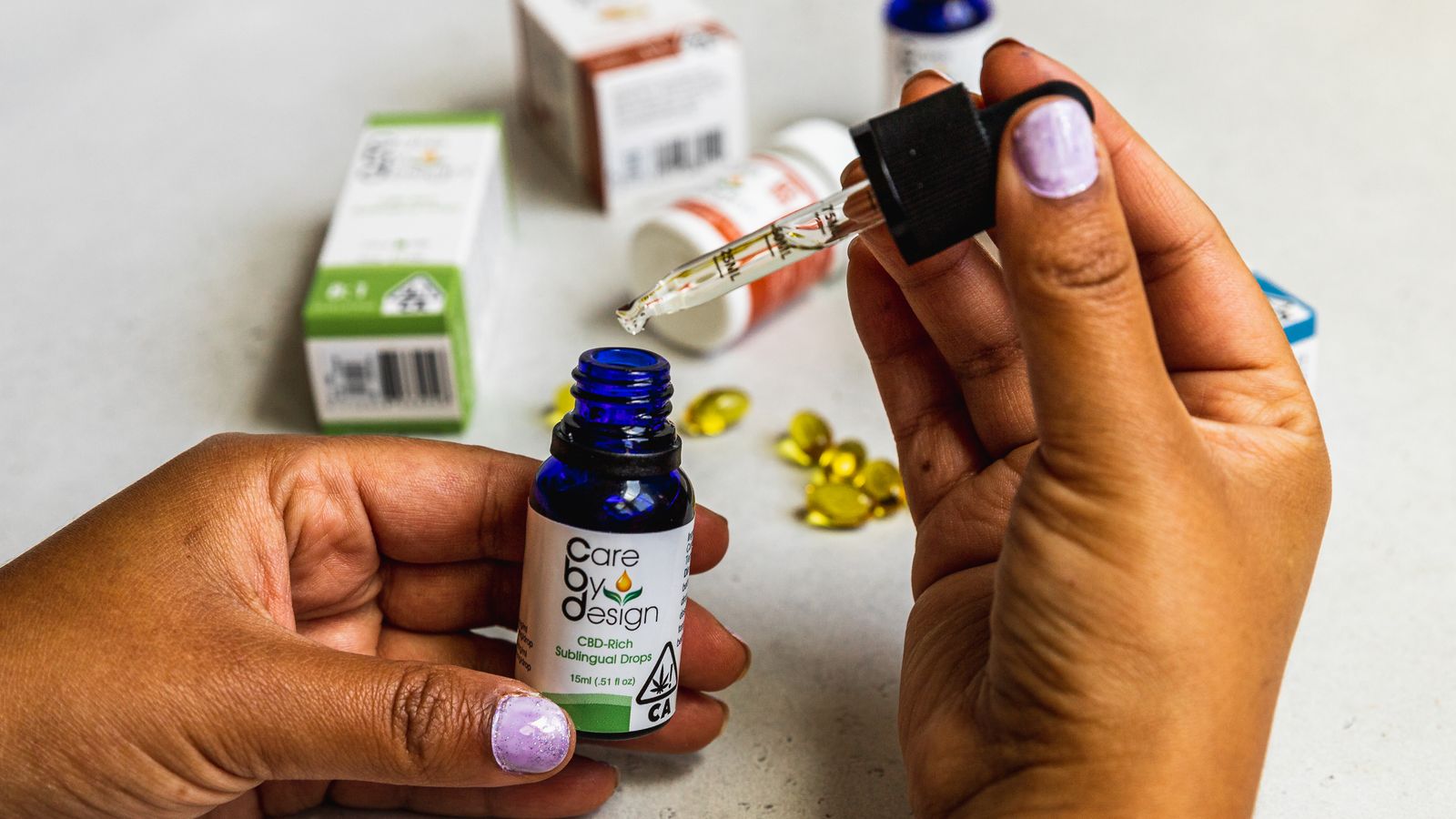
Regular customers sometimes come back a few months in and ask a reasonable question: “Do I need to keep raising my dose, or will the amount I take now keep working?” With most substances, from caffeine to THC to prescription painkillers, the body adapts and yesterday’s dose becomes today’s shrug. CBD appears to be an exception, and the reason comes down to how it interacts with your receptors.
Why THC tolerance builds, in one paragraph
THC binds directly and strongly to CB1 receptors, the cannabinoid receptors concentrated in your brain. Hit those receptors hard and often, and the brain responds by pulling some of them back inside the cell and dialing down the sensitivity of the rest, a process called downregulation. This is well documented in imaging studies of heavy cannabis users, and it is why daily THC users need more to feel the same effect, and why a tolerance break restores sensitivity within a few weeks.
Why CBD plays by different rules
CBD barely binds to CB1 receptors at all. Instead of pressing the button THC presses, it works indirectly: nudging receptor behavior from the side, slowing the breakdown of anandamide, one of the endocannabinoid system‘s own signaling molecules, and acting on entirely different targets like serotonin receptors. No strong, repeated receptor activation means no obvious trigger for the downregulation that drives THC tolerance.
The clinical evidence, thin as it is, points the same way. Epilepsy patients on prescription CBD have stayed at stable doses for long stretches without losing seizure control, and studies following those patients have generally not reported the dose-creep you would expect if tolerance were building. A 1980s trial in epilepsy patients dosed CBD daily for months with no tolerance reported. That is not a mountain of proof, and most of it comes from medical dosing rather than the 25 mg wellness range, but nothing in the published record shows classic CBD tolerance developing.
You may run into the claim that CBD produces “reverse tolerance,” meaning you eventually need less. The theory is that supporting the endocannabinoid system over time leaves it running better on its own. It is an appealing idea with very little direct research behind it, so we file it under interesting rather than established.
So why does it feel like it stopped working?
And yet people do report that CBD seems to fade for them. A few explanations are more likely than tolerance:
- The novelty wore off. First doses come with attention and expectation, both of which amplify perceived effects. Month three is just Tuesday.
- The baseline moved. If CBD was helping you sleep and life got more stressful, the same dose against a harder problem feels weaker.
- The product changed. Batches vary, especially from less rigorous brands, and a bottle stored in a hot car for an Alabama summer will degrade. Check dates, check lab reports, store it cool and dark.
- The dose was borderline to begin with. A barely-effective dose does not take much drift to become an ineffective one.
If it genuinely seems weaker, try a two-week break, then restart at your original dose. If it works again, the break either reset something or, more likely, reset your attention. Either way you got your answer cheaply.
What we recommend
Find your minimum effective dose and stay there. There is no evidence you need to escalate CBD the way people escalate THC, so if your dose keeps doing its job, leave it alone. Reassess every few months: some customers find they can step down, and some find they no longer need it daily at all, which is a perfectly good outcome we are happy to lose sales to.
The usual footnotes apply. If you take other medications, especially anything with a grapefruit warning, clear CBD with your doctor, and remember that full-spectrum products carry trace THC, which absolutely does build tolerance and can accumulate for drug testing purposes. But on the core question, the news is good: the dose that works for you today has a solid chance of still working next year, and that is rarer in this world than it should be.