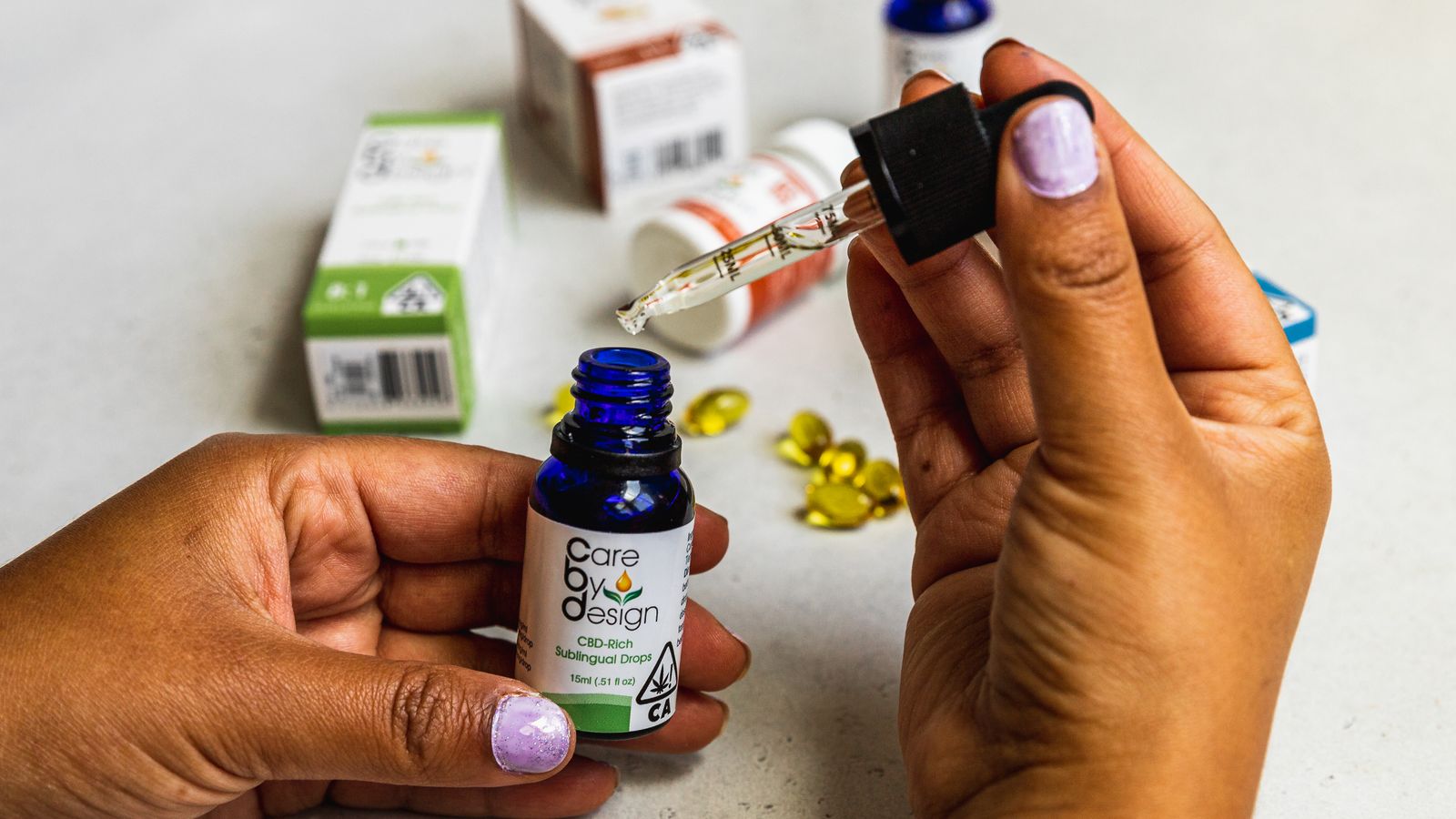
If you’ve ever wondered what actually goes into a CBD gummy or vape cartridge, the answer is very often a thick, golden, honey-like substance called CBD distillate. It’s one of the workhorse ingredients of the entire hemp industry, and understanding it explains a lot about the products built from it.
From crude to golden
Distillate starts where extraction ends. Hemp gets processed with CO2 or ethanol into a crude extract, a dark sludge that contains CBD along with waxes, fats, chlorophyll, and dozens of other plant compounds. That crude then goes through two refinement stages.
Winterization comes first: the crude is dissolved in cold ethanol and chilled hard, which makes the fats and waxes clump and fall out so they can be filtered away. Then comes the step that gives distillate its name, short-path distillation. The extract is heated under deep vacuum, and because vacuum lowers boiling points dramatically, cannabinoids can be vaporized and re-condensed at temperatures that don’t destroy them. Different compounds boil off at different points, so the operator can collect a fraction that is mostly CBD and leave the rest behind.
What comes out is typically 80 to 90 percent CBD, golden to amber in color, thick as cold honey, with most of the plant’s original character stripped away.
Distillate, isolate, and full spectrum: where it fits
Think of refinement as a dial. Full spectrum extract sits at the low end: minimally refined, containing the plant’s whole range of cannabinoids and terpenes, including up to 0.3 percent THC. CBD isolate sits at the far end: a white crystalline powder that is 99 percent pure CBD and nothing else.
Distillate sits between them. It usually retains minor cannabinoids like CBG and CBC alongside its CBD, but the distillation heat drives off most terpenes, the volatile compounds responsible for aroma and flavor. Some manufacturers reintroduce terpenes afterward to rebuild a flavor profile; others leave distillate as the nearly neutral ingredient it naturally is.
That near-neutrality is exactly why manufacturers love it. A gummy made with full spectrum extract tastes noticeably like hemp. A gummy made with distillate tastes like a gummy.
THC content: read carefully
Standard CBD distillate can still carry trace THC concentrated right along with the CBD, sometimes near the legal 0.3 percent line. Manufacturers also sell THC-free and broad spectrum distillates where the THC has been specifically removed. If you’re subject to drug testing, this distinction matters, and the only way to verify it is a certificate of analysis showing THC below detection limits. Trace THC in a daily-use product can accumulate enough to show up on a drug test, which is not a call anyone wants from HR.
Will you ever buy distillate directly?
Mostly you’ll meet it inside other products: gummies, vape cartridges, capsules, topicals, and tinctures all commonly start from distillate. Raw distillate is sold in syringes too, mostly to DIY types who use it to make their own edibles at home. One practical note if that’s you: distillate is already decarboxylated by the heat of processing, so it’s orally active as-is. No oven step needed, unlike raw flower.
The usual honesty applies when buying anything made from it. An 85 percent distillate diluted into a finished product can end up at any strength the maker chooses, so judge products by tested milligrams, not by the word “distillate” on the label. And as with all CBD, start low, go slow, and talk to your doctor if you take prescription medications.