The CBD aisle has a vocabulary problem. Half the words on a label are chemistry, the other half are marketing, and telling them apart takes practice. This is the glossary we wish every first-time customer had in their pocket: the terms that actually come up, in plain English, with the marketing fluff called out as fluff.
The plant and its chemistry
Cannabinoid. Any of the hundred-plus compounds the cannabis plant makes that interact with your body’s receptors. CBD and THC are the famous ones. CBG, CBN, and CBC show up on labels too.
CBD (cannabidiol). The non-intoxicating cannabinoid this whole industry is built on. It won’t get you high at any dose.
THC (tetrahydrocannabinol). The cannabinoid that does get you high. Legal hemp products must contain no more than 0.3 percent delta-9 THC by dry weight.
Hemp. Cannabis with 0.3 percent delta-9 THC or less. Same species as marijuana, different legal category. The 2018 Farm Bill drew this line federally.
Terpenes. The aromatic oils that give cannabis, pine trees, and lavender their smells. They may shape how a product feels, and they’re a big part of why full spectrum extracts differ from pure CBD.
Endocannabinoid system. The network of receptors and signaling molecules in your body that cannabinoids interact with. You have one whether or not you’ve ever touched cannabis; it helps regulate sleep, mood, appetite, and pain signaling.
Decarboxylation. The heat step that converts the raw acid forms of cannabinoids (like CBD-A and THC-A) into their active forms. Extracts sold as CBD have already had this done.
The product types
Full spectrum. An extract keeping everything the plant made: CBD, minor cannabinoids, terpenes, and up to 0.3 percent THC.
Broad spectrum. Full spectrum with the THC removed. The middle option for people who want the supporting compounds but zero THC.
Isolate. Pure CBD, typically 99 percent, as a crystalline powder or products made from it. No THC, no terpenes, no flavor.
Entourage effect. The theory that cannabinoids and terpenes work better together than in isolation. There’s real research behind the idea, but it’s a hypothesis with support, not settled science. Treat label claims about it accordingly.
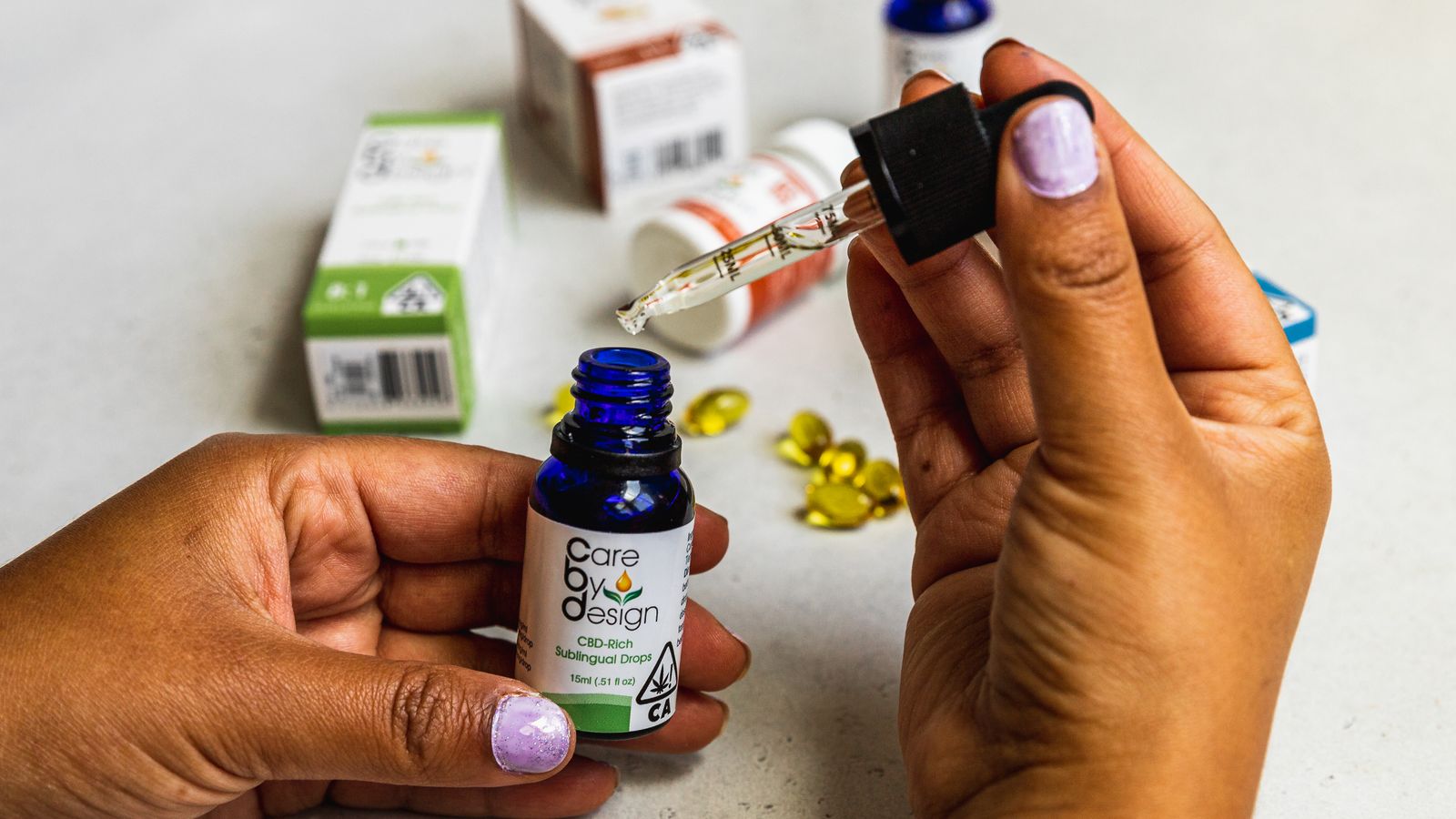
Tincture. CBD dissolved in a carrier oil, taken by dropper under the tongue.
Carrier oil. The oil that dilutes the extract to a usable strength. Usually MCT (coconut), hemp seed, or olive oil.
Distillate. A refined extract, typically 80 to 90 percent CBD, made by distillation. A common ingredient in edibles and vapes.
Topical. Anything applied to skin: balms, salves, lotions. Ours are built on beeswax from our own hives. Topical CBD works locally and doesn’t enter the bloodstream in any meaningful amount.
The label and lab terms
COA (certificate of analysis). The third-party lab report showing what’s actually in the product. The single most important thing on any CBD label, usually behind a QR code. No COA, no sale.
Batch number. The production lot your product came from. It should match the batch on the COA, otherwise the lab report proves nothing about your bottle.
mg (milligrams). The actual measure of CBD content. Compare products by milligrams per serving and price per milligram, not by bottle size.
Bioavailability. The fraction of a dose your body actually absorbs. Swallowed CBD runs low, roughly 6 to 19 percent in studies; holding a tincture under the tongue does somewhat better.
Hemp seed oil. Pressed from seeds, which contain no meaningful CBD. Nutritious, but a product listing only hemp seed oil is not a CBD product, no matter how many leaves are on the label. This is the most common trick in the business.
Keep the last two terms in mind together and you can spot most bad products from across the room: real ones tell you the milligrams and show you the lab report. Everything else is decoration.