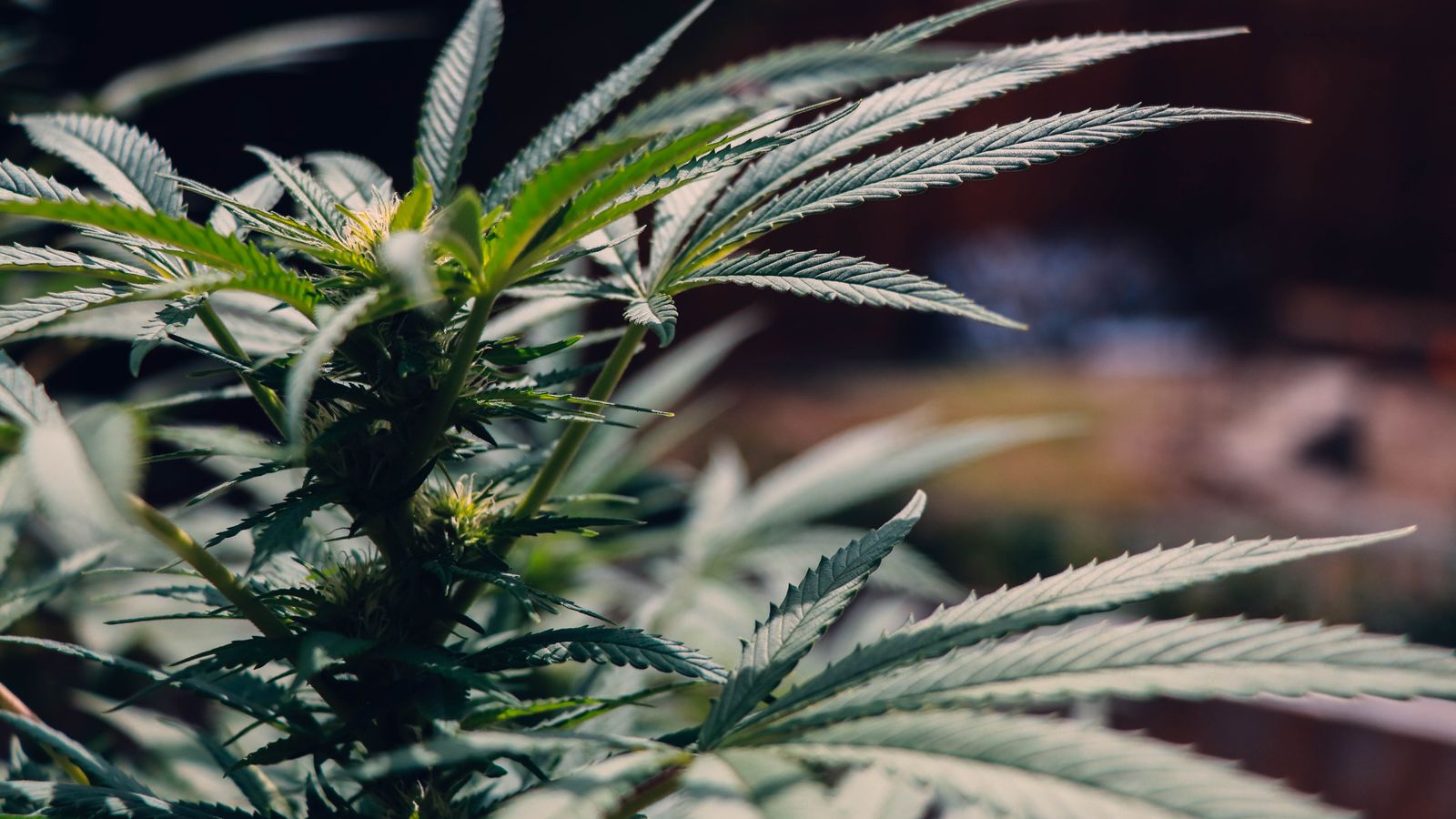
THCV is the cannabinoid that appears to do the opposite of what cannabis is famous for. Where THC reliably produces the munchies, THCV may suppress appetite, which earned it the nickname “diet weed” and a wave of marketing that has gotten well ahead of the science. The real story is more interesting than the nickname, and more honest too.
A shorter tail on the molecule
THCV stands for tetrahydrocannabivarin. Structurally it’s nearly identical to THC, except its carbon side chain is three carbons long instead of five. That shortened tail changes how it interacts with your endocannabinoid system in a genuinely odd way: at low doses THCV blocks CB1 receptors, the same receptors THC activates. At high doses it flips and activates them.
That’s why the answers to “does THCV get you high” are so contradictory. At the small doses in most products, it shouldn’t, and it may blunt some of THC’s effects, including the appetite surge. At large doses it can produce a high, generally described as clear and short-lived. Both claims are true; they’re just about different amounts.
The plant doesn’t make much of it. THCV shows up meaningfully in certain African landrace sativas, Durban Poison being the famous example, and in strains bred from them. Most cannabis contains only traces, which is why THCV products cost what they do.
What the research actually shows
The appetite story rests on real but early science. Animal studies found THCV reduced food intake in mice. The most cited human work is a 2016 trial in Diabetes Care, where 62 people with type 2 diabetes took THCV or placebo for 13 weeks. THCV improved fasting blood sugar and some markers of pancreatic function. Notably, it did not produce significant weight loss. Read that again, because the diet weed marketing skips it: the best human trial we have showed metabolic effects, not slimming.
A 2015 brain-imaging study also found THCV changed how subjects’ brains responded to images of food, consistent with an appetite-dampening mechanism. Interesting is not the same as proven, though. We have small trials, short durations, and no long-term data on THCV as a weight-management tool in healthy people. Anyone selling it as a fat burner is selling past the evidence.
Buying THCV without getting fleeced
Because genuine THCV is scarce and expensive, the market invites shortcuts. Some products deliver honest amounts from real extraction; others sprinkle in a token milligram or two next to a big THCV on the label; and some rely on lab conversion, with the same purity questions that follow delta-8. The defense is the one we repeat like a prayer around here: read the certificate of analysis, find the actual THCV milligrams per serving, and compare that number to the price. Under 5 mg per serving is a garnish, not a dose.
Also check what it’s blended with. Many THCV gummies include delta-9 or delta-8, partly for effect and partly because pure THCV is costly. That changes both the experience and the drug-test math. And on that subject: THCV can trigger a positive on standard THC screens. It’s not a workaround.
Our honest take
THCV is one of the most genuinely interesting minor cannabinoids, with a receptor profile unlike anything else in the plant and early evidence worth following, especially around blood sugar. It is not a proven appetite suppressant in humans, and it’s definitely not a weight-loss plan. If you’re curious, treat it like any cannabinoid experiment: start low, buy tested products from a licensed shop, and loop in your doctor if you’re diabetic or take medications, since the blood sugar effects are exactly the kind of thing that can interact with treatment. The science here is a good first chapter. Just don’t let a label convince you the book is finished.