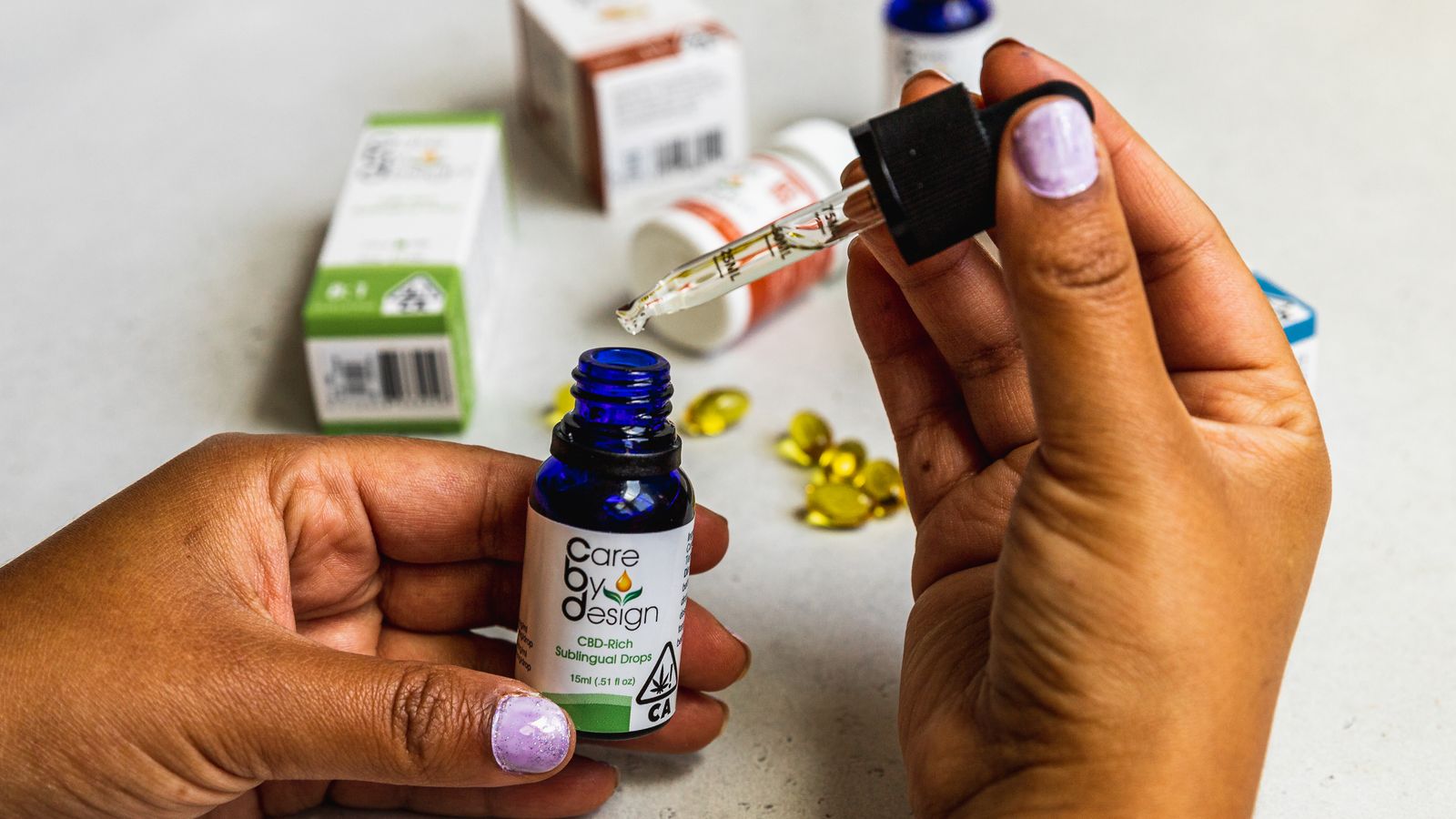
Anxiety is the number one reason people walk into our shop asking about CBD. It is also the area where the gap between what the marketing says and what the research says is widest, so it is worth walking through what studies actually exist.
The studies people cite
The most quoted piece of evidence is a 2019 case series published in The Permanente Journal by Dr. Scott Shannon and colleagues. Seventy-two psychiatric patients at a Colorado clinic added CBD, mostly 25 mg a day, to their existing treatment. Within the first month, anxiety scores dropped for about 79 percent of them. That sounds impressive, and it is encouraging, but notice what it was not: there was no placebo group, no blinding, and the patients kept taking their regular medications. A case series can point at something worth studying. It cannot prove the CBD did the work.
The stronger evidence comes from public speaking studies, of all things. Researchers like putting anxious people in front of a simulated audience because it reliably spikes anxiety in a measurable way. In a 2011 Brazilian trial, people with social anxiety disorder who took 600 mg of CBD before a speech reported significantly less anxiety and discomfort than the placebo group. A 2019 Japanese trial gave teenagers with social anxiety 300 mg of CBD daily for four weeks and saw meaningful reductions on standard anxiety scales.
Read those doses again. Three hundred to six hundred milligrams. A typical CBD gummy contains 10 to 25 mg. The doses that performed in trials are ten to sixty times what most people actually take, and nobody has done a large trial showing that a 25 mg gummy does anything for anxiety at all. That is the uncomfortable middle of this story.
Why it might work
CBD interacts with the endocannabinoid system, the network of receptors and signaling molecules your body uses to regulate mood, stress response, and a surprising amount else. It also acts on serotonin 5-HT1A receptors, the same general territory some anxiety medications operate in. So there is a plausible mechanism. Plausible mechanisms are cheap in pharmacology, though. Plenty of things that should work on paper do nothing in people.
One more wrinkle: some research suggests CBD’s effect may follow an inverted U shape, where moderate doses help and very high doses help less. If true, that makes “just take more” bad advice and makes careful, consistent dosing worth the trouble.
What we tell customers
If you want to try CBD for everyday anxiety, here is the honest playbook.
- Pick one product with a third-party lab report and stick with it for two or three weeks. Anxiety fluctuates day to day, so a single evening tells you almost nothing.
- Start low, around 10 to 25 mg, and increase slowly if you feel nothing. Some people respond at low doses even though the trials used high ones. Bodies vary.
- Keep the rest of your life constant while you test. If you start CBD the same week you quit caffeine and start jogging, you will never know what helped.
- Talk to your doctor first if you take any psychiatric medication, blood thinners, or anything with a grapefruit warning. CBD shares liver enzymes with a long list of prescriptions.
- Do not stop a prescribed anxiety medication to switch to CBD. That decision belongs in a doctor’s office, not a hemp shop.
And a hard line we hold: CBD is not a treatment for panic disorder, PTSD, or anxiety that is interfering with your work, sleep, or relationships. Those deserve a professional. CBD, at best, is a supporting player.
The bottom line
The research on CBD and anxiety is real but thin, the effective doses in trials are much higher than what is in most products, and the strongest results come from short-term situational anxiety rather than the long-haul kind. Interesting is not the same as proven. If you try it, treat it like an experiment with yourself as the only subject, keep notes, and hold the conclusions loosely.