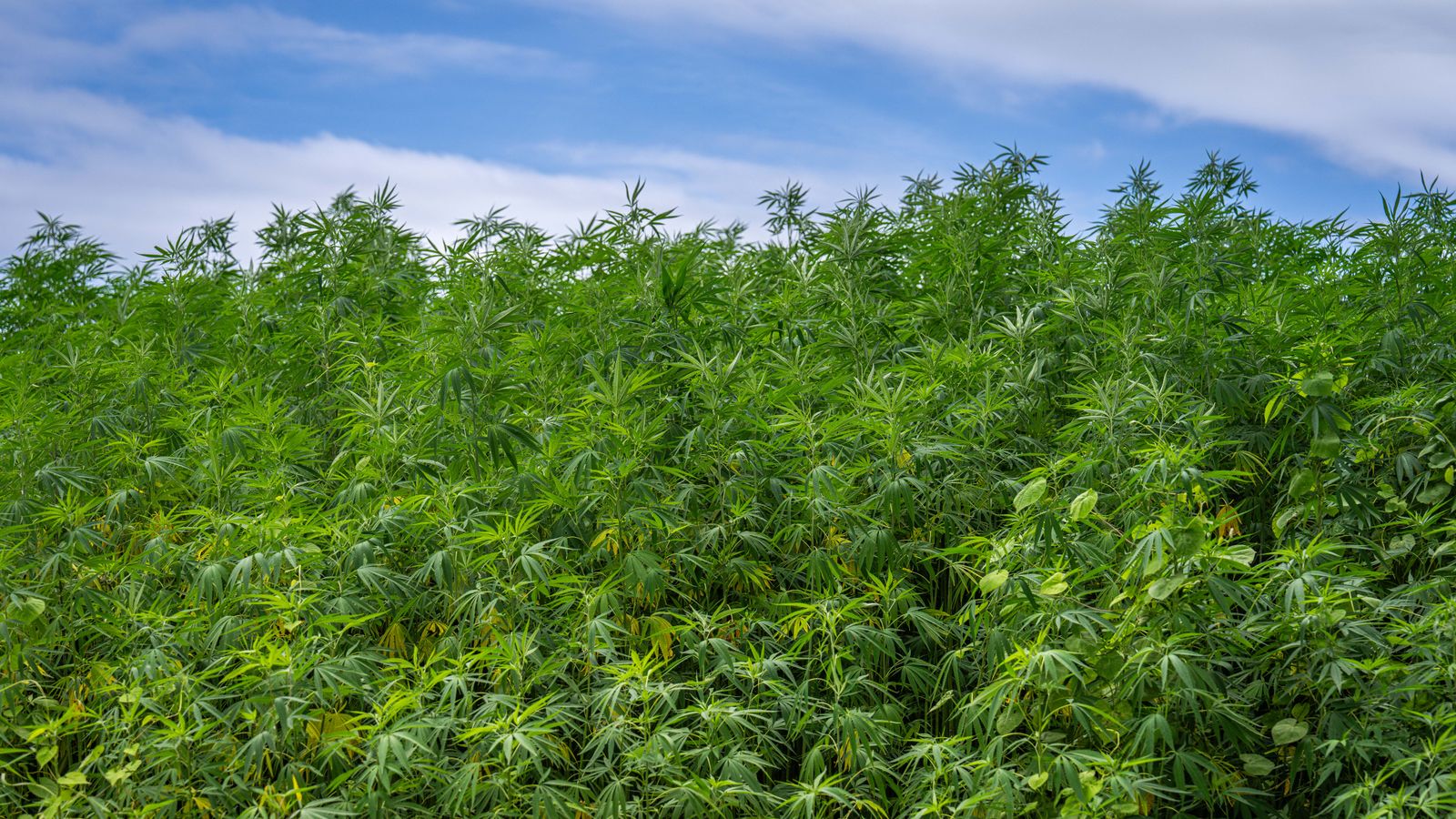
Hemp can pull toxic metals out of poisoned soil. That’s not a metaphor. Plant it in ground contaminated with lead or cadmium, and the plant draws those metals up into its stalks and leaves, cleaning the dirt as it grows. The technique is called phytoremediation, and hemp turns out to be unusually good at it.
Phytoremediation just means using plants and sunlight to clean up contaminated environments. Hemp (Cannabis sativa) works as what scientists call a phytoremediator, a plant that can remove, break down, or lock up pollutants in soil and water. Here’s how it does it and why it matters.
How hemp removes heavy metals
Hemp can take up several heavy metals, including lead, cadmium, and nickel. The main mechanism is straightforward: the roots absorb the metals from the soil, and the plant stores them in its above-ground biomass, mostly the leaves, stems, and roots.
Once the plants are harvested, that contaminated biomass gets processed to recover the metals. Two common methods do this. Pyrolysis heats the material to high temperatures without oxygen, breaking it down into smaller molecules, gases, and liquids. Bioleaching uses microorganisms to oxidize the metals and release them from the biomass, after which the metals can be recovered through techniques like electrowinning or solvent extraction. Either way, you’re often left with leftover biomass that can be burned for fuel or turned into paper.
What the research says
The book *Heavy Metal Tolerance in Plants: Evolutionary Aspects* by Jonathan Shaw covers how plants accumulate and tolerate heavy metals, and how those abilities can be put to work for cleanup. It names hemp specifically as a candidate for cleaning heavy-metal-contaminated soils, noting that hemp tolerates metals like cadmium, lead, and zinc well and can store large amounts in its stalks.
One important distinction: hemp is not a hyperaccumulator. It’s a phytoextractor. The difference matters. Hyperaccumulators pack enormous amounts of metal into their tissues without being harmed. Phytoextractors like hemp pull significant amounts of metal out of the soil but don’t necessarily stockpile it the same way. For practical cleanup, hemp’s combination of decent extraction and fast, sturdy growth is what makes it useful.
Shaw also points out that using hemp effectively requires understanding how metal accumulation and tolerance actually work, since genetics, plant physiology, and the environment all play a role. How well phytoremediation performs depends on the type of metal, how concentrated it is in the soil, which plant you use, and the growing conditions. There’s no single guaranteed result.
The chemistry behind it
Hemp handles toxic metals thanks to a couple of specialized compounds: phytochelatins and metallothioneins. Both bind to metal ions and keep them from harming the plant.
Phytochelatins are peptides the plant produces in response to heavy-metal stress. They grab onto the metals and chelate them, preventing uptake into the roots. Metallothioneins are small, cysteine-rich proteins made under the same kind of stress; they detoxify metals by binding them to their cysteine residues. This is where a related process, phytostabilization, comes in. Instead of removing the pollutants, the plant immobilizes them, binding them at the root surface and forming insoluble metal-organic complexes in the tissue. The metals stay put but become far less bioavailable and less toxic.
Hemp can also clean through phytovolatilization, releasing volatile organic compounds that help pull pollutants out of the air.
The bottom line
Hemp shows real promise as a cleanup crop for heavy-metal-contaminated soil and water. It removes metals effectively, stores them in its biomass, and keeps growing at a normal rate while doing it, which is remarkable given that these metals are toxic to most plants and animals. A crop that can thrive in poisoned ground and haul the poison out with it is a genuine advantage.
More research is still needed to understand hemp’s full potential and to build practical strategies for real-world use, and there are legal and social questions to sort out along the way. But the basic capability is proven, and for contaminated land that would otherwise sit useless, that’s worth paying attention to.