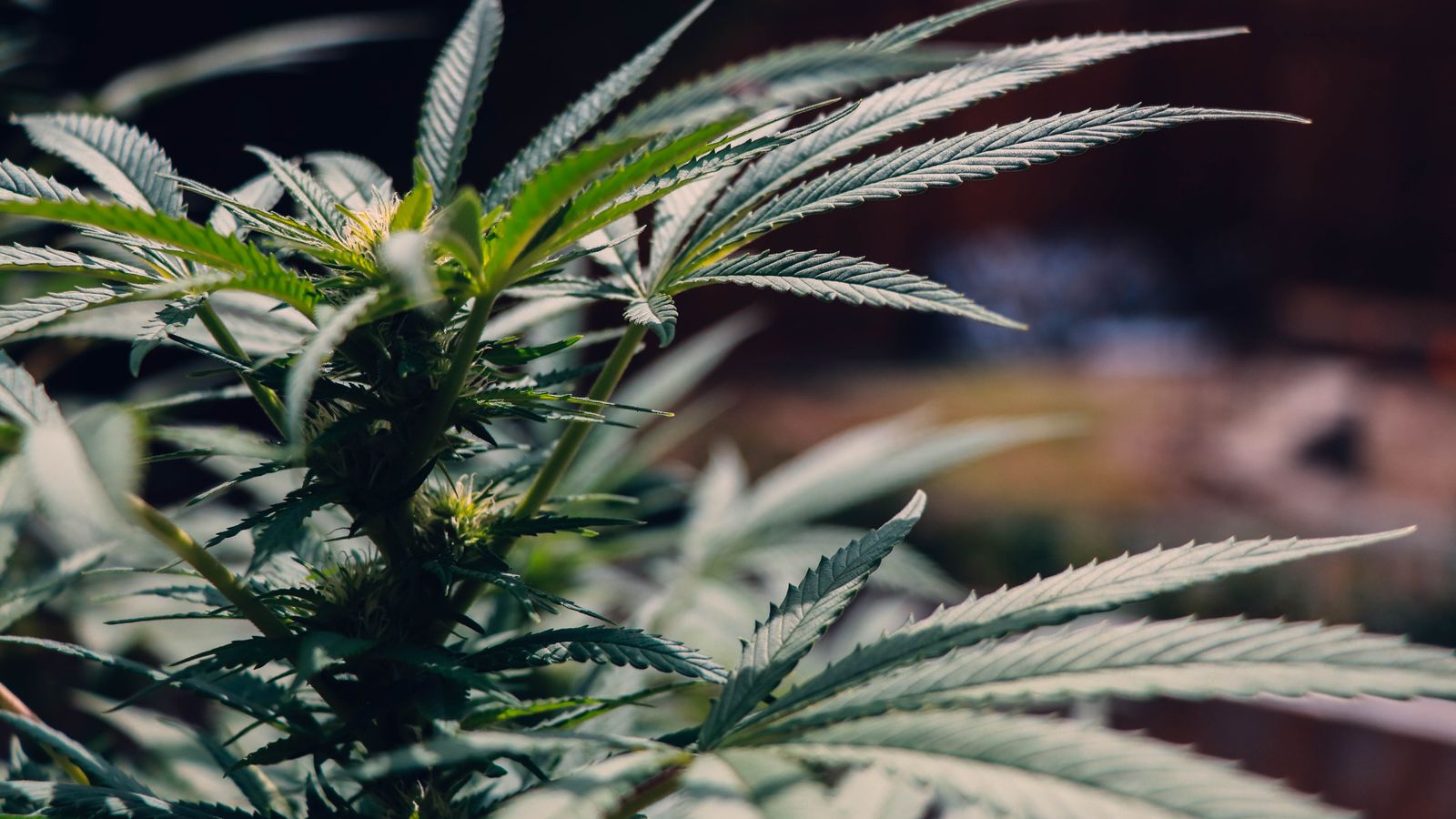
Most people know cannabis the way most people know cars: one or two part names and a general sense of the shape. That works fine until you’re trying to understand a grow guide, a trimming video, or why one part of the plant is valuable and another gets composted. So here’s the walk-around tour, from the ground up.
Stem, nodes, and branches
The main stem does what stems do: hold the plant up and move water and nutrients. The points where branches meet the stem are called nodes, and they matter more than they look like they should. Growers count nodes to time training and topping, and nodes are where the plant first reveals its sex. The spacing between nodes (internodal spacing) also hints at genetics; classically, sativa-leaning plants stretch long between nodes and indica-leaning plants stack tight.
Fan leaves
These are the big, iconic, seven-fingered leaves that ended up on every t-shirt and flag. They’re the plant’s solar panels, running photosynthesis all season. What they are not is potent. Fan leaves carry only trace cannabinoids, which is why they’re trimmed away and usually composted or juiced. Anyone who ever tried smoking fan leaves learned a harsh lesson in plant anatomy.
Sugar leaves
Move in closer to the flowers and you find small leaves poking out from between the buds, often coated in the same frost as the flower itself. That frost is trichomes, the resin glands where cannabinoids and terpenes are made, and it’s why these are called sugar leaves. They’re potent enough to matter but harsher than flower, so trimmers cut them off and set them aside. That trim is the standard raw material for making hash, kief, and infused butter. Nothing wasted, just sorted.
The flower, piece by piece
The bud itself is not one thing; it’s a dense cluster of small parts.
Bracts are small, tear-shaped leaf structures that make up most of a bud’s mass, and they carry the highest trichome density on the plant. (People often call these calyxes; botanically the calyx is a thin layer inside the bract, but the trade uses the words loosely.)
Pistils are the flower’s reproductive organs, and the visible parts are the stigmas: the hairs that start white and darken to orange, red, or brown as the plant matures. Their job is catching pollen. Their color helps signal ripeness, though trichome color is the more reliable harvest clock. Despite a stubborn myth, red hairs do not mean extra potency.
A cola is the term for a whole cluster of buds growing tightly together along the top of a stem. The main cola at the plant’s peak, sometimes called the apical bud, is the trophy piece.
Why anatomy is worth knowing
Because the plant’s value is wildly uneven. A cannabis plant is mostly stem, fan leaf, and water; the trichome-dense bracts of the female flower carry nearly all the THC, and everything else falls somewhere on a gradient down to nothing. Whole industries sort the plant accordingly: flower to the shelf, sugar trim to extraction, fan leaves and stalk to compost or fiber. Hemp farmers work the same anatomy from the other direction, growing for stalk fiber and seed instead of resin.
It also makes you a smarter shopper. Fluffy buds heavy on stem, or flower that’s mostly leaf, means more waste per gram. Dense, well-trimmed bracts with visible frost is what the whole plant was working toward all season.
One plant, maybe a dozen part names worth knowing. Learn them once and every grow log, trim tutorial, and product description gets easier to read.