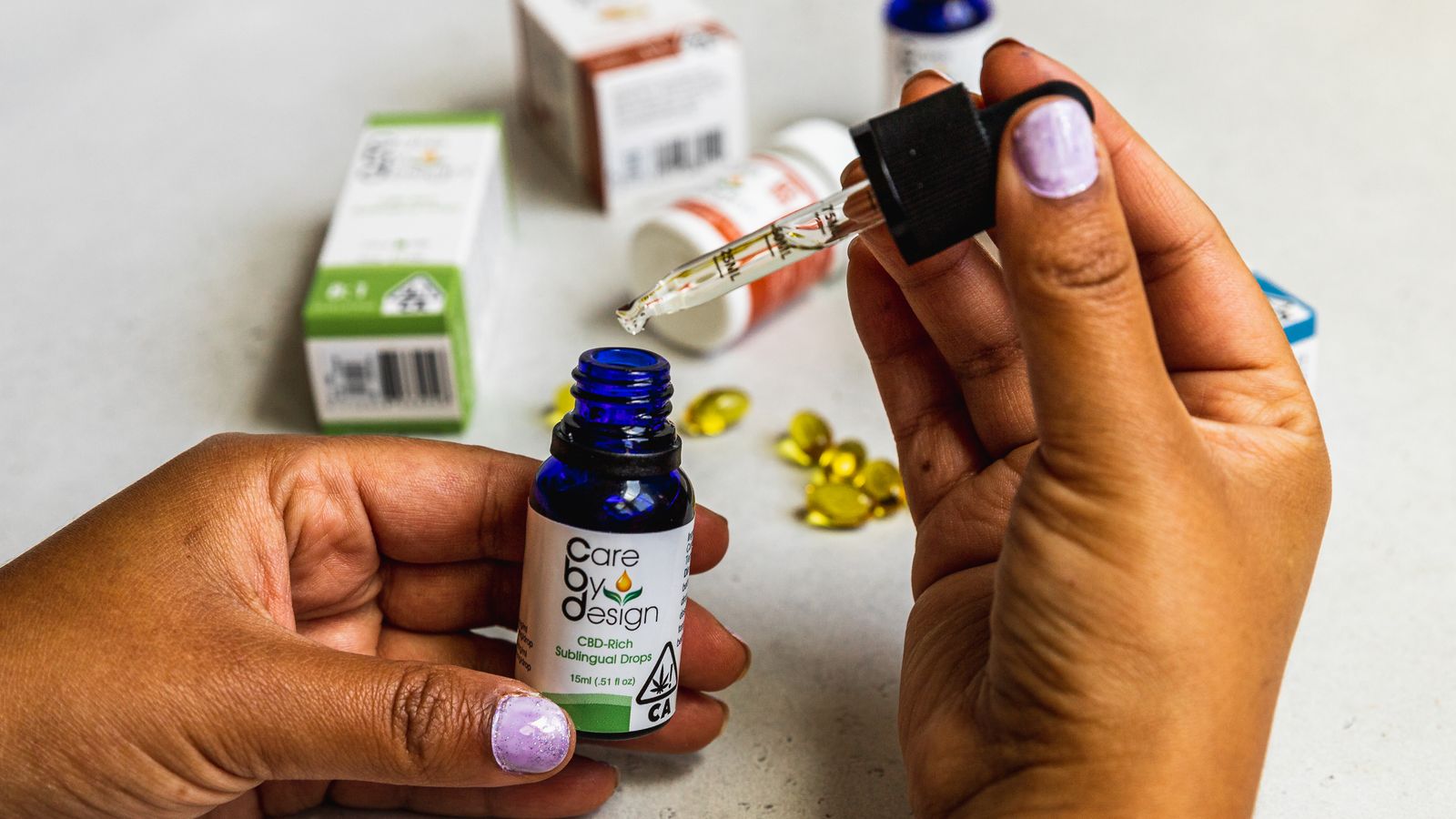
This is the mix-up we correct more than any other, and it costs people real money. Someone buys a big bottle of “hemp oil” online for twelve dollars, takes it for a month, feels nothing, and concludes CBD is snake oil. What they actually bought was salad dressing.
Hemp seed oil and CBD oil come from the same plant. That is where the similarity ends.
Two products, two parts of the plant
Hemp seed oil is pressed from the seeds, the same way olive oil is pressed from olives. Hemp seeds contain no meaningful CBD, no THC, no cannabinoids at all worth mentioning. What they do contain is fat, and genuinely good fat: hemp seed oil runs around 75 to 80 percent polyunsaturated fatty acids, with omega-6 and omega-3 in roughly a 3 to 1 ratio, which nutrition researchers consider a favorable balance. It has a green, nutty flavor and works well drizzled on food or used in skin care. You can buy it at any grocery store, and for cooking or moisturizing, it is a fine product at a fair price.
CBD oil is a different animal. The CBD lives in the flowers and leaves, concentrated in the same sticky resin glands that produce terpenes. Making CBD oil means extracting that resin, usually with CO2 or ethanol, then diluting the extract into a carrier oil. The carrier is often MCT coconut oil, and sometimes, in a nice bit of circularity, hemp seed oil itself. That is part of why the confusion persists: a legitimate CBD product can list hemp seed oil as an ingredient.
Why the labels are so confusing
Some of the confusion is accidental. A lot of it is not.
Major online marketplaces prohibit CBD sales, so sellers there list hemp seed oil dressed up to look like CBD, with cannabis leaves on the label and huge numbers like “5,000mg” printed up front. Look closely and that number describes total hemp seed oil content, not CBD, because there is no CBD in it. Meanwhile, actual CBD companies sometimes label their products “hemp extract” to stay on the right side of various rules, which muddies things from the other direction.
So the front of the bottle is nearly useless. Read the back:
- Hemp seed oil appears on ingredient lists as “hemp seed oil,” “cannabis sativa seed oil,” or “virgin hemp oil.”
- CBD appears as “CBD,” “cannabidiol,” “hemp extract,” “full-spectrum hemp extract,” or “phytocannabinoid-rich (PCR) hemp oil.”
- A real CBD product states its CBD content in milligrams and can back it up with a third-party lab report, called a certificate of analysis. No lab report, no CBD, is a safe rule of thumb.
Price is a second tell. Hemp seed oil is cheap to produce. If a large bottle of “hemp oil” costs less than lunch, it is seed oil, whatever the leaf art implies.
Which one do you actually want?
It depends entirely on the job. If you want omega fatty acids in your diet or a light oil for your skin, hemp seed oil is the honest choice, and cheaper than the wellness industry would like you to know. If you are after what people generally seek from CBD, the interaction with your body’s endocannabinoid system, then only CBD oil contains the active ingredient, and you should expect to pay accordingly, because extraction and lab testing cost real money.
One safety note that applies only to the CBD side: if you take prescription medications, check with your doctor or pharmacist before starting CBD, since it can affect how the liver metabolizes certain drugs. Hemp seed oil carries no such concern. It is food.
Both oils earn their spot on the shelf. Just make sure the one in your cart matches the reason you walked in. And if you are ever standing in our shop squinting at a label trying to tell which is which, hand it over. Decoding hemp labels is half our job these days.