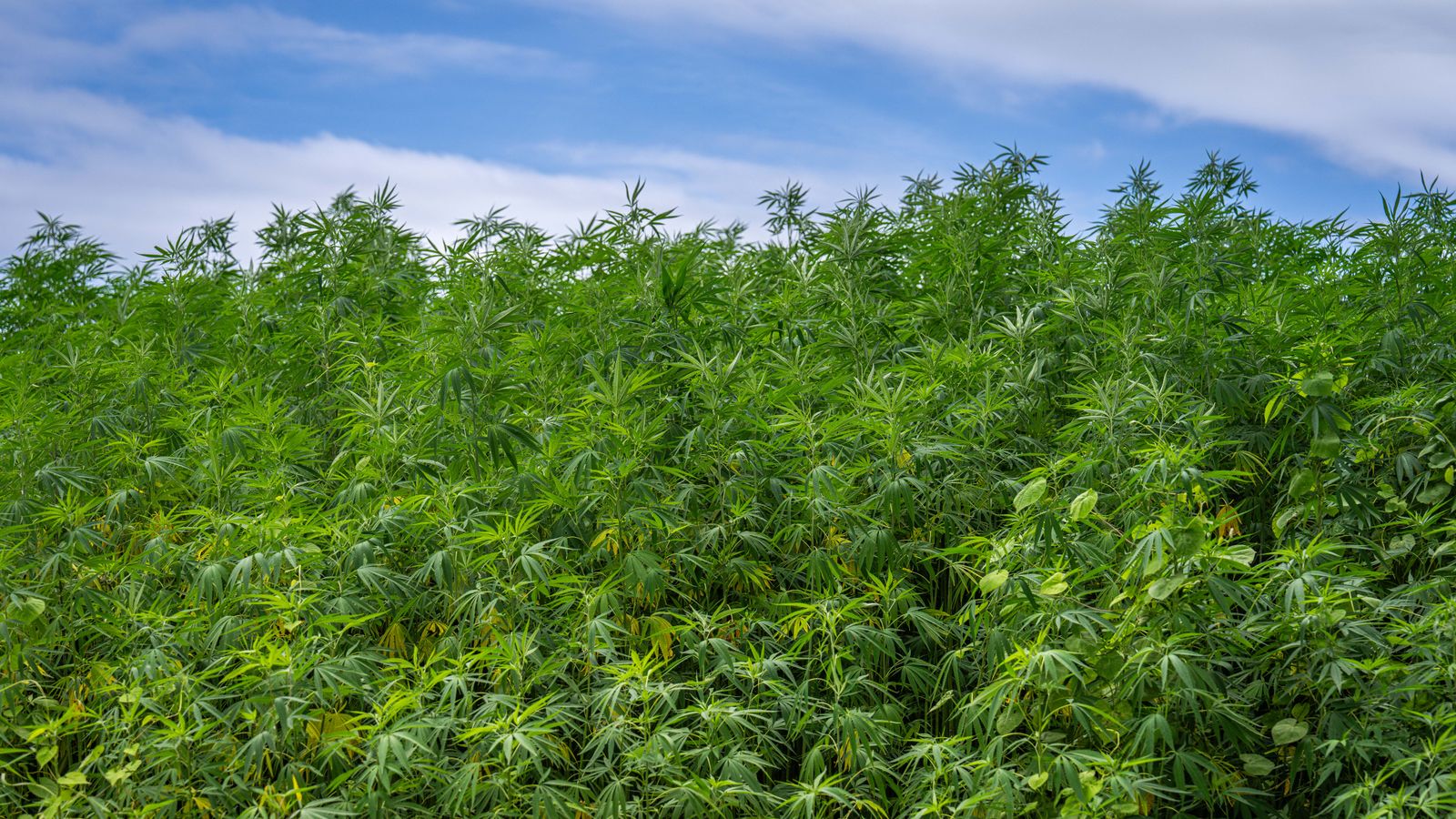
Alabama’s hemp law draws important distinctions among smokable, consumable, and other hemp products. Those distinctions matter for retailers, consumers, regulators, and law enforcement.
Alabama House Bill 445 made major changes to the state’s treatment of hemp products. It banned certain products, created a regulated market for consumable hemp products, placed licensing and enforcement authority with the Alabama Alcoholic Beverage Control Board, and established serious penalties for violations.
But one question continues to cause confusion: Does HB445 treat every inhalable hemp product as a “smokable hemp product”?
The text of the enrolled bill does not use those terms interchangeably. Earlier versions and proposed rules used broader language that could have expressly included vapor products. That language did not appear in the final statutory definition, and a proposed ABC rule defining “smokable” to include vapor produced by a battery was omitted from the rules ultimately adopted.
That does not automatically settle every possible product-classification dispute. It does, however, mean that “smokable,” “vaporizable,” and “inhalable” should not be treated as synonyms without analyzing the actual product and the applicable law.
What HB445 changed
HB445 was introduced during Alabama’s 2025 Regular Session, passed by the Legislature, and signed into law in May 2025. Most of the act became effective July 1, 2025. Its ABC-administered system for consumable hemp products became operative January 1, 2026.
The law does several things at once:
- Regulates finished consumable hemp products sold in Alabama
- Requires licensing, testing, labeling, and compliant packaging
- Limits THC content in regulated consumable products
- Restricts sales to people who are at least 21
- Prohibits online sales and direct-to-consumer shipment of consumable hemp products
- Prohibits the sale or possession of products specifically excluded from the law’s definition of a consumable hemp product
- Authorizes seizure and forfeiture in specified circumstances
Because the penalties can be severe, accurate product classification is not a technicality. It is central to lawful enforcement.
The law’s definition of a consumable hemp product
HB445 defines a “consumable hemp product” as a finished product intended for human or animal consumption that contains hemp or a hemp-derived compound, concentrate, extract, isolate, or resin. It separately defines “consumption” as: “Ingesting or topically applying to skin or hair.”
That definition matters. The Legislature could have defined consumption to include inhalation, but it did not. Elsewhere in the same act, the Legislature separately uses the terms “ingested,” “inhaled,” and “absorbed” to define a contaminant. The use of three separate terms shows that the act recognizes them as different routes of exposure.
In plain English, a product designed to be swallowed or applied to the body fits comfortably within the statutory idea of consumption. A product designed solely to produce an inhaled aerosol raises a different classification question under the text of HB445.
What the statute calls a smokable hemp product
The law excludes “smokable hemp products” from the regulated consumable-hemp category and declares excluded products strictly prohibited. Its examples focus on plant products and raw hemp material marketed as:
- Hemp cigarettes
- Hemp cigars
- Hemp joints
- Hemp buds
- Hemp flowers
- Hemp leaves
- Ground hemp flower
- Variations of those terms
Those examples share an obvious characteristic: they are forms of hemp plant material ordinarily used through combustion.
The definition says the list is not exhaustive, so the examples are not the final word. Still, the statutory language does not expressly name vape cartridges, disposable vaporizers, wax, shatter, crumble, rosin, live resin, inhalers, aerosols, or nebulizers as smokable hemp products.
That omission is especially important when compared with the language considered earlier in the rulemaking process.
The proposed ABC rule expressly included vapor. The adopted rule does not.
The ABC Board’s proposed Chapter 20-X-31 would have defined “smokable” as any product heated by combustion, battery, or another means to produce smoke or vapor that may be inhaled.
That proposed definition would have expressly placed battery-powered vapor products inside the meaning of “smokable.”
The final Chapter 20-X-31 adopted by the ABC Board contains no definition of “smokable” at all. The adopted rules became effective December 15, 2025, and operative January 1, 2026.
The deletion does not, by itself, amount to a court ruling that every vapor product falls outside HB445. It does show that the broad proposed definition was not adopted. An enforcement agency should not quietly restore that deleted language as though it were part of the final rule.
Combustion and vaporization are different processes
The practical distinction is straightforward:
- Smoking ordinarily involves combustion: plant material burns, producing smoke.
- Vaping ordinarily involves heating a liquid or concentrate to produce an aerosol or vapor without burning plant material.
- Inhalable is the broader everyday category because both smoke and aerosol can be inhaled.
Something can therefore be inhalable without being smokable in the ordinary combustion-based sense. If lawmakers or regulators want a prohibition to cover all inhalable products, they can say so directly. In fact, the proposed ABC definition did exactly that before it was removed.
Why the distinction matters for enforcement
HB445 makes the sale or possession of a hemp product specifically excluded from the consumable-hemp definition a Class C felony. It also allows unlawful hemp products to be treated as contraband and seized.
Penalties that severe require careful, product-specific analysis. Classification should consider:
- The physical form of the product
- Whether it is marketed as raw hemp
- Whether it is intended to burn or produce an aerosol
- Its ingredients and method of manufacture
- Its labeling, advertising, and intended use
- Whether it contains a prohibited chemically synthesized or converted psychoactive cannabinoid
- Whether another Alabama or federal law independently regulates the product
A product should not be classified solely because it contains a cannabinoid or because its use involves inhalation. The relevant question is whether the particular product fits the words of the particular prohibition being enforced.
What HB445 clearly prohibits
Whatever disagreement may remain at the edges, HB445 is clear in several important areas.
The act prohibits smokable hemp products described by the statutory definition, including hemp flower, buds, joints, cigarettes, and similar plant-material products marketed as smokable. It also prohibits products containing psychoactive cannabinoids created through specified chemical synthesis, modification, or conversion using non-cannabis materials, subject to the act’s decarboxylation exception.
The act further prohibits direct-to-consumer shipment of consumable hemp products and imposes licensing, testing, packaging, THC-content, and retail requirements on products that fall within the regulated consumable category.
This article is not an argument that all hemp-derived vapor products are automatically lawful. A product can be restricted by another statute, a federal requirement, its chemical composition, its marketing, or the facts of how it was manufactured and sold. The narrower point is that HB445’s smokable-product clause should be applied according to the words Alabama enacted, not according to broader language that was proposed and omitted.
A sound approach for retailers, regulators, and law enforcement
Anyone making an enforcement or compliance decision should start with the final enrolled act and the rules actually adopted, not an introduced draft, a proposed rule, a press summary, or a generalized assumption about hemp products.
For each product, the analysis should ask:
- Is it intended for ingestion or topical application and therefore potentially a consumable hemp product?
- Is it plant material or raw hemp that is marketed as flower, bud, a joint, a cigarette, or another smokable variation?
- Is it designed for combustion, vaporization, or another route of use?
- Does it contain a prohibited chemically synthesized or converted psychoactive cannabinoid?
- Does another state or federal law govern the device, substance, sale, or possession?
That approach respects the Legislature’s wording, reduces arbitrary enforcement, and gives businesses and consumers clearer notice of what the law requires.
The bottom line
HB445 unquestionably prohibits smokable hemp products and regulates consumable hemp products. But the final law does not expressly declare that every inhalable or vaporized hemp product is “smokable.” The ABC Board considered a definition that would have expressly included battery-generated vapor and did not adopt it.
That history supports a careful distinction between combustion, vaporization, and ingestion. Until an Alabama appellate court or the Legislature squarely resolves the disputed edge cases, broad claims that HB445 automatically covers every inhalable hemp product should be treated with caution.
Clear laws deserve clear enforcement. When criminal penalties and property seizure are at stake, the government should apply the enacted language, not the proposed, rejected, or assumed language.
This article is for public education and general informational purposes only. It is not legal advice and does not create an attorney-client relationship. Hemp businesses and individuals facing a compliance or enforcement question should consult a qualified Alabama attorney about the specific product and facts involved.
Prepared by Alabama Canna Consulting