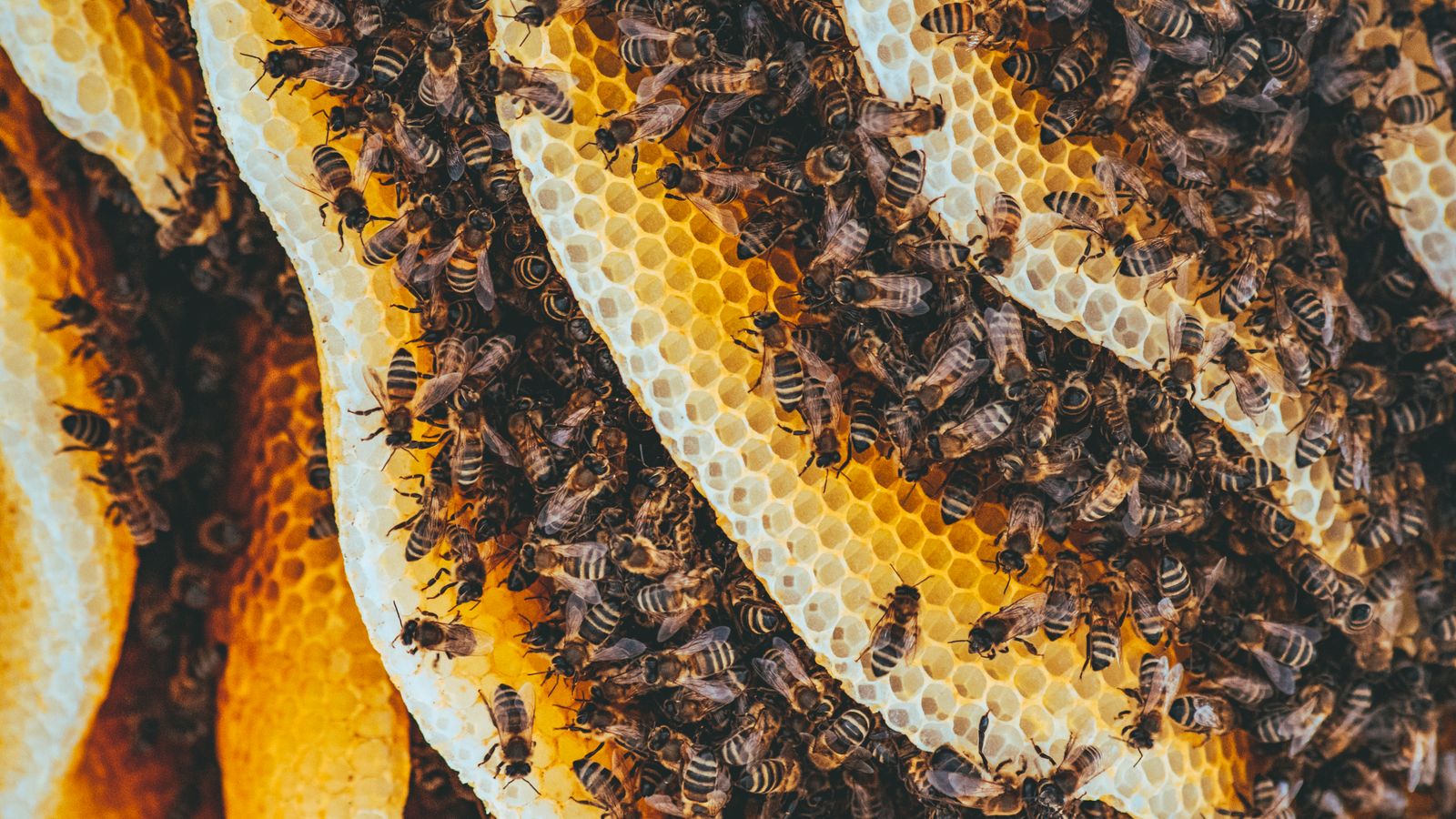
Honey and beeswax get all the attention, but bees make a third substance that’s arguably more impressive: propolis. It’s a resin that bees collect from tree buds and bark and use to seal and defend their hive against pests and pathogens. Humans have borrowed it for thousands of years, valuing it for antibacterial, antiviral, and anti-inflammatory properties. Essentially, it’s the hive’s immune system, and it turns out to work for us too.
What’s in it?
Propolis is a mix of compounds, including flavonoids, terpenoids, aromatic acids, and other organic substances. The exact makeup shifts depending on the plants the bees visited, the geography, and the season, so no two batches are identical. Even with all that variation, propolis reliably shows the beneficial properties that make it a fixture in health and wellness products.
What bees do with it
Inside the hive, propolis is a construction material and a disinfectant rolled into one. Bees use it to seal small gaps and cracks that would otherwise let in cold air or pests, and they line the hive walls and coat the honeycomb surface with it to cut the risk of bacterial and fungal infection. It even doubles as an embalming agent: when an intruder like a mouse gets into the hive and dies there, too big for the bees to remove, they coat the body in propolis to keep it from rotting. Ingenious and a little grim.
How it’s harvested
Beekeepers collect propolis from the hives and process it to extract the active ingredients. It’s often gathered raw and then turned into tinctures, capsules, creams, and other forms that end up in health and wellness products.
The health benefits
Propolis is popular for good reason. Among its most notable properties:
Antibacterial. Propolis has antibacterial activity effective against a wide range of infections, including some of the more dangerous bacteria like Staphylococcus aureus and Escherichia coli.
Antiviral. It also fights viruses, and it’s been especially noted against the flu virus, which is why it’s served as a natural flu remedy for centuries.
Anti-inflammatory. Propolis can reduce inflammation and swelling, which makes it a common ingredient in pain-relief products and a traditional treatment for inflammatory conditions like arthritis and dermatitis.
Immune support. It has immune-boosting properties that help the body fend off infections, another reason it’s shown up in supplements and folk remedies for generations.
How to use it
If you want to try propolis, you can contact your local beekeeper or buy it in forms like a raw honey mixture, powder, throat spray, or even bee pollen on its own. It comes in a lot of formats, and the best one depends on what you’re treating and what you prefer:
Tinctures. A liquid form taken orally, usually in small doses through the day. Convenient and easy to adjust.
Capsules. A simple, no-mess way to take propolis orally. Also available as a powder.
Creams. A topical form applied straight to the skin, good for skin conditions, topical infections, and easing pain and inflammation.
Sprays. Applied directly to the affected area, sprays are handy for throat infections and for immune support.
The bottom line
Bee propolis is a versatile natural substance with a genuinely wide range of benefits, from antibacterial and antiviral to anti-inflammatory and immune-boosting. Whether you’re targeting a specific issue or just want to support your overall health, it’s worth considering, and it’s one more reason bees are worth protecting.
FAQs
What is propolis used for? Its antibacterial, antiviral, anti-inflammatory, and immune-boosting properties, delivered through tinctures, capsules, creams, and sprays.
Is it safe? Generally, when used as directed. But people with bee allergies should be cautious, since it can cause an allergic reaction, and it shouldn’t be used during pregnancy or breastfeeding, since its safety in those cases isn’t established.
How do I take it? It depends on the form and what you’re treating. Follow the instructions on the product label for best results.
Where can I buy it? At health food stores and online retailers, or from a local beekeeper. Choose a reputable brand and look for products that have been independently tested for quality and potency.